

Preparation Process of Cemented Carbide Blends
Release date:
2021-12-01
Author:
Source:
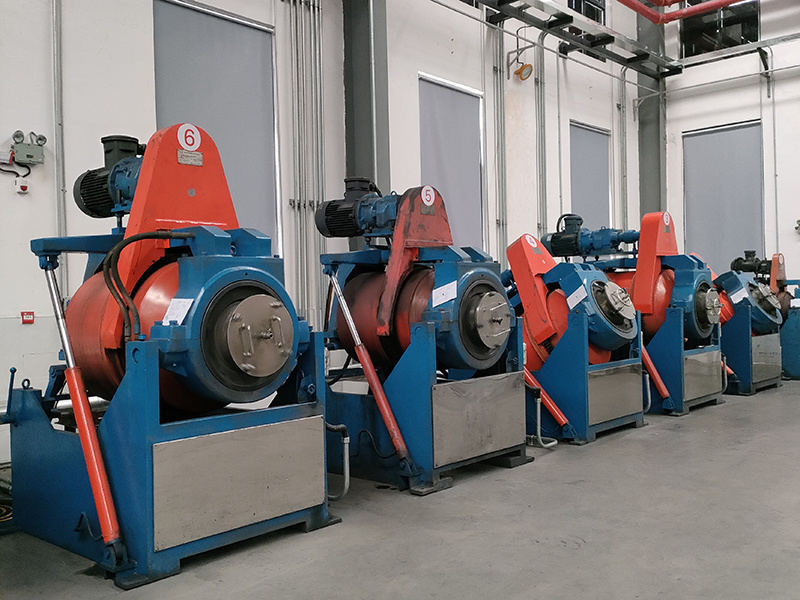
The preparation of cemented carbide mixtures involves processing raw materials such as tungsten carbide powder and cobalt powder through wet grinding, filtration, sedimentation, drying, sieving, and quality inspection to obtain the powders required for pressing. Wet grinding is a critical step in adjusting powder particle size, thereby controlling the final grain size of the alloy. During wet grinding, the grinding media must meet specific requirements: it should not react with the raw materials, have low surface tension to prevent powder agglomeration, contain minimal impurities, possess a low boiling point (evaporating below 100°C), be inexpensive, and easy to recover. Currently, alcohol is the most commonly used medium for this process. The primary equipment involved includes various ball mills, dryers, and sieving machines. Several factors influence the efficiency of wet grinding, including the rotational speed of the milling jar, the filling ratio, the size of the grinding balls, the ball-to-material ratio, and the duration of the grinding process. Drying, essentially, refers to the evaporation of the wet grinding medium—such as alcohol—from the slurry, followed by its condensation and recovery.
Before the mixture is officially put into production, a comprehensive quality inspection must be conducted to evaluate its process performance, chemical composition, physical properties of standard test samples, microstructure, cross-sectional features, and service performance. These results should then be compared against national standards or the company’s internal control criteria to determine whether the mixture meets the required specifications. Only if it passes the inspection can it be released for use; otherwise, the cause of non-compliance must be identified and addressed appropriately.
1. Process Performance of the Mixture
Process performance primarily refers to the material's particle size and its composition, as well as properties such as flowability, stability, and bulk density. Randomly selected samples weighing 50–200 g are subjected to tests like sieve analysis, flow measurement, and microscopic examination, following either national standards or the company's internal control criteria.
2. Chemical Composition of the Mixture
The chemical composition of the mixture generally meets specifications, but if issues arise, they usually stem from oxygen content. Therefore, factors such as storage duration, media levels, thoroughness of drying, and even weather conditions must all be strictly adhered to according to established guidelines.
3. Physical and Mechanical Properties of Alloys
Here, we are referring to the specific gravity, hardness, flexural strength, coercivity, magnetic saturation, and other properties of standard samples. These must meet the corresponding national standards or the company's internal control standards.
4. Metallographic Structure of the Alloy
It primarily refers to the alloy's porosity, non-combined carbon, and η phase, as well as the average grain size and composition of WC, and the thickness of the cobalt layer—these must all comply with national standards or the company's internal control standards.
5. Alloy Section Inspection
Alloy cross-section inspections are typically conducted under a magnifying glass with 20- to 40-times magnification. This allows for qualitative assessment of defects such as alloy contamination (porosity), overheating, underburning, carbon penetration, carbon depletion, material mixing, and improper compaction—and can even help pinpoint the origin of fractures. Although there is no national standard for this process, only company-specific internal control standards exist, these guidelines nonetheless play a critically important role in guiding production within the enterprise.
Related News
What are the advantages of carbide threaded drill bits?
2025-09-20
How to effectively improve the surface precision of workpieces?
2022-07-05
Things to keep in mind when using carbide hob cutters!
2022-07-05

Sireep
WeChat QR code
Service hotline:+86-731-22590305
Email:eva.ling@sruipu.com
Address: Building 6-B, Power Components Industrial Park, Xinma Innovation & Self-Reliance Park, Tianyuan District, Zhuzhou City, Hunan Province
tel:
E-mail:
在线客服添加返回顶部
启用全局默认滚动动画 (向上滚动)
右侧在线客服样式 1,2,3 1
图片alt标题设置: Zhuzhou Sirepu Cemented Carbide Co., Ltd.
表单验证提示文本: The content cannot be empty!
循环体没有内容时: Sorry, no matching content was found.
CSS / JS 文件放置地