

How is cemented carbide machined, and how can cracks be avoided?
Release date:
2021-07-22
Author:
Source:
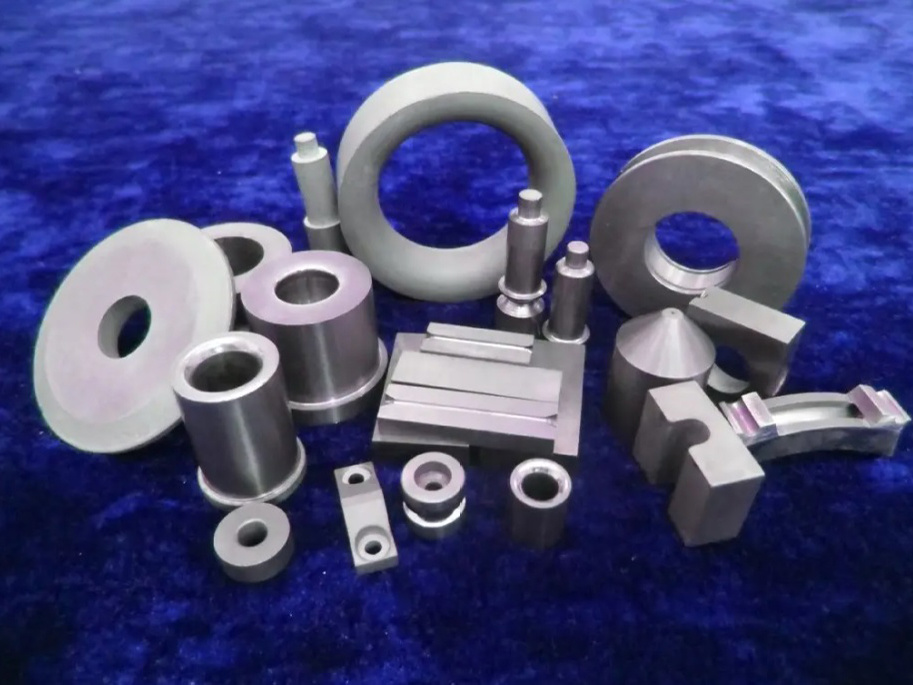
Hard alloy boasts a range of excellent properties, including high hardness, wear resistance, good strength and toughness, as well as exceptional heat and corrosion resistance. In particular, its remarkable hardness and wear resistance remain largely unchanged even at temperatures as high as 500°C, and it still maintains impressive hardness at 1000°C. Hard alloy is characterized by its superior hardness, strength, and durability...
Cemented carbides boast a range of excellent properties, including high hardness, wear resistance, good strength and toughness, as well as exceptional heat and corrosion resistance. Notably, their remarkable hardness and wear resistance remain virtually unchanged even at temperatures as high as 500°C, and they still maintain impressive hardness at 1,000°C.
Cemented carbides boast high hardness, strength, wear resistance, and corrosion resistance—they are often referred to as the "teeth of industry"—and are widely used in manufacturing cutting tools, blades, cobalt-based products, and wear-resistant components. As downstream industries continue to grow, the demand for cemented carbide products is steadily increasing. Looking ahead, the development of advanced high-tech weapon systems, breakthroughs in cutting-edge science and technology, and the rapid expansion of nuclear energy will significantly boost the demand for high-tech, high-quality, and exceptionally reliable cemented carbide products.
Challenges in Hard Alloy Machining
Due to the high melting point and brittleness of cemented carbides, sufficient pulse current density is required for machining—but using coarser machining settings is not an option. When employing existing pulse power supplies with shorter pulse widths for medium- and fine-setting operations, electrode materials such as copper and graphite tend to experience significant wear and material loss.
According to the existing qualitative theory of low-loss machining, the ratio of peak current to pulse width should be ≤ A (where A is a constant—e.g., when machining steel with copper, A ≤ 0.1 A/μs). However, using electrical pulses with these parameters to machine cemented carbides often results in extremely low productivity, rendering the process impractical for real-world applications.
Related News
What are the advantages of carbide threaded drill bits?
2025-09-20
How to effectively improve the surface precision of workpieces?
2022-07-05
Things to keep in mind when using carbide hob cutters!
2022-07-05

Sireep
WeChat QR code
Service hotline:+86-731-22590305
Email:eva.ling@sruipu.com
Address: Building 6-B, Power Components Industrial Park, Xinma Innovation & Self-Reliance Park, Tianyuan District, Zhuzhou City, Hunan Province
tel:
E-mail:
在线客服添加返回顶部
启用全局默认滚动动画 (向上滚动)
右侧在线客服样式 1,2,3 1
图片alt标题设置: Zhuzhou Sirepu Cemented Carbide Co., Ltd.
表单验证提示文本: The content cannot be empty!
循环体没有内容时: Sorry, no matching content was found.
CSS / JS 文件放置地